PET FAIR SOUTH EAST ASIA

28 - 30 OCTOBER 2026

Singapore Pet Care Market

Click Here: TGM GLOBAL PET CARE REPORT 2024 SINGAPORE

3 Key Trends Redefining Pet Care in Singapore, 2024

As pet ownership continues to rise in Singapore, so do the expectations of pet parents. From digital-first shopping habits to growing investments in hygiene and health, Singapore’s pet care landscape is shifting to reflect a more informed, convenience-seeking, and species-diverse consumer base.

The TGM Global Pet Care Report 2024 – Singapore Edition (https://tgmresearch.com/pet-care-2024-insights-in-singapore.html) uncovers emerging preferences in how owners care for their pets: what they’re buying, where they’re buying it, and the values driving those decisions. These trends present valuable cues for brands looking to meet modern pet parents where they are.

Key Insights from TGM’s Research:

• Multi-pet households in Singapore are becoming more diverse, with growing interest in fish, hamsters, and other non-traditional pets.
• Online platforms now lead in pet food purchases, with supermarkets still playing a significant role.
• Pet owners are raising grooming standards through a mix of professional services and regular at-home hygiene routines.

Multi-Pet Households Are Moving beyond the traditional dog-and-cat model

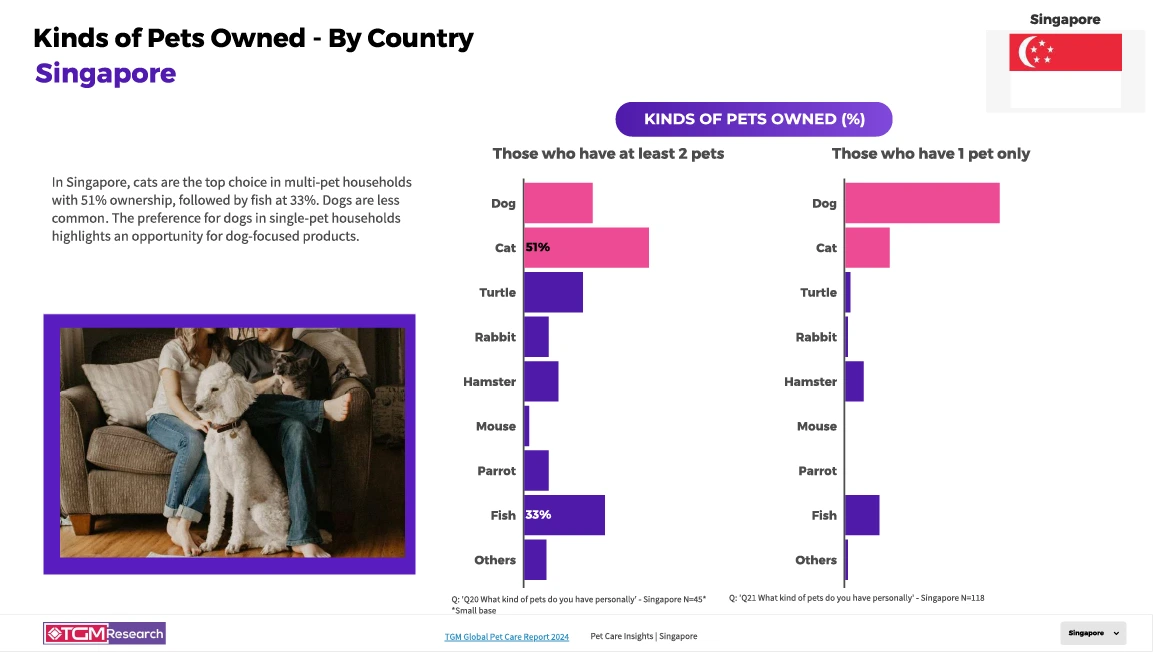
Recent pet ownership data from Singapore points to a growing shift in household dynamics. In multi-pet homes, cats (51%) have become the leading choice, while fish are also gaining popularity, often chosen to bring a sense of calm and nature into compact urban spaces. Beyond these familiar companions, more owners are exploring smaller or less conventional pets, such as turtles and hamsters, adding new layers to the modern pet ecosystem. This evolution invites brands to rethink product versatility, from cleaning solutions safe for multiple species to furniture and accessories designed to support varied pet routines under one roof.
Online Becomes the Primary Channel for Pet Food

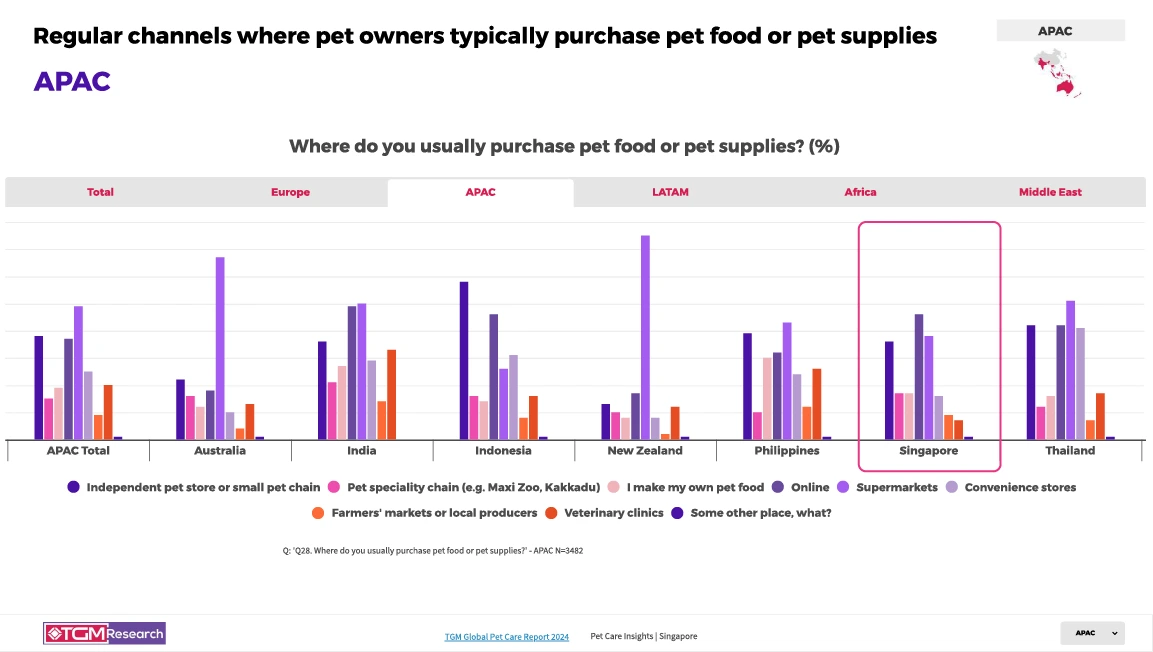
More pet owners in Singapore are turning to online platforms for their pet food needs, with 45% now choosing to shop digitally. This shift highlights the rising demand for convenience, as pet parents seek speed, variety, and doorstep delivery in an increasingly connected lifestyle. While supermarkets remain popular for their familiarity and the simplicity of picking up pet food alongside groceries, their appeal is gradually being challenged by the ease and flexibility of e-commerce.
Pet Parents Are Raising the Bar on Hygiene and Wellness

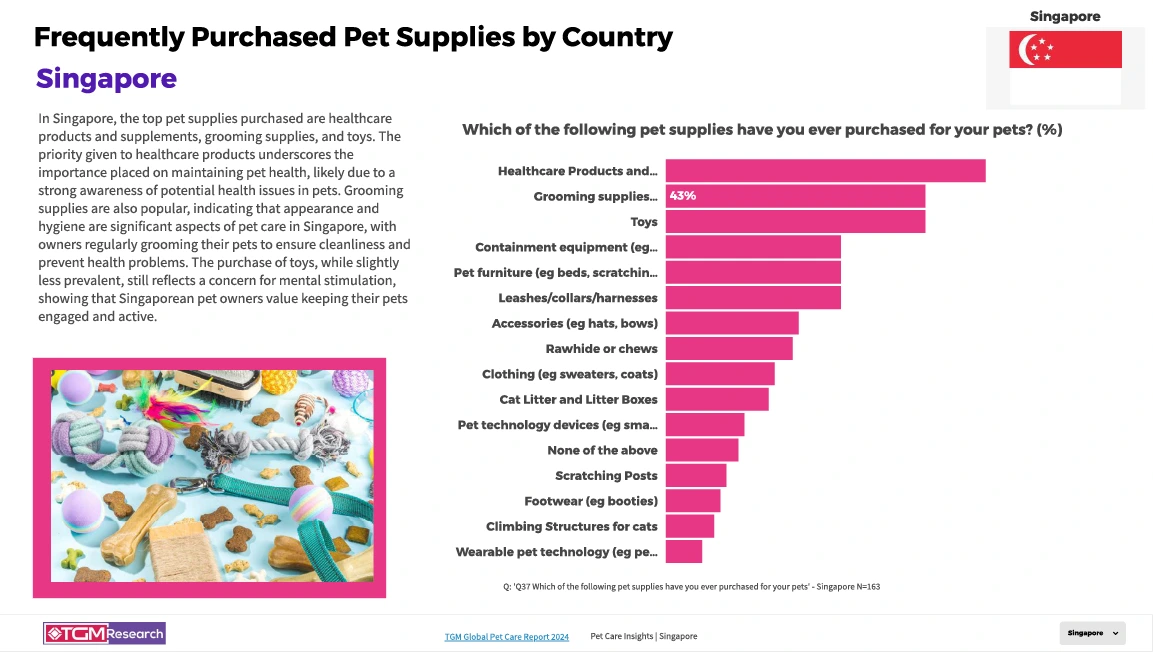
A growing number of Singaporean pet owners are investing in professional grooming, with 44% having used such services in the past year. Meanwhile, 43% regularly purchase grooming and hygiene products, reflecting a commitment to maintaining those standards at home. This balanced approach signals a rising benchmark in pet wellness that combines expert care with consistent, day-to-day upkeep. As expectations evolve, so does the demand for grooming solutions that are both effective and easy to use. Whether through premium formulations or convenient, at-home formats, products that align with owners’ wellness routines are well-positioned to earn trust and shelf space.
To explore these shifts in greater detail and uncover how they’re reshaping the pet care category, dive into the full TGM Global Pet Care Report 2024 – Singapore Edition, filled with insights designed to help brands meet the moment.

https://tgmresearch.com/pet-care-2024-insights-in-singapore.html

Image folder: https://drive.google.com/drive/folders/1Je3FtUCc82pD0agi2tdiglf6HoGVI5qB?usp=sharing
 

2025

Pet care in 2025: The big picture

Singapore’s pet care market grew steadily in 2024, driven by aging pets, improved veterinary care, and demand for health-focused products. In 2025, growth continues, especially in dog and cat food, but at a slower pace due to inflation and rising living costs. Consumers are becoming more budget-conscious, shifting focus from premium items to essential, functional products. The market remains resilient, with projected growth of 5–6% and value reaching SGD 350–400 million.


2025 key trends

Singaporean pet owners continue to favor small dog breeds and cats, suited to compact urban living. Pet parenting is increasingly humanized, with pets treated as family. This shift drives key trends: premiumization, wellness, and sustainability. Owners prefer clean-label products with botanical ingredients, plant-based supplements, and organic grooming kits. Despite modest pet population growth, demand is rising for smart, eco-friendly solutions—reflecting a lifestyle alignment with wellness, tech, and conscious consumerism already seen in the human sector.

Competitive landscape

Singapore’s pet market remains highly competitive, with traditional retailers facing pressure from e-commerce growth. Premium and personalized pet products are driving market expansion, while sustainability and health-focused offerings gain traction. The sector is seeing increased digital engagement through social media and influencer marketing. Brick-and-mortar stores are adapting by offering experiential services to differentiate themselves. The market remains fragmented, with convenience, innovation, and customer experience emerging as key competitive factors. Industry consolidation is expected as players strive for greater market share in this growing sector.

Retailing developments

Before the pandemic, physical stores (pet shops, supermarkets) dominated purchases, with e-commerce limited to niche buyers. The pandemic accelerated online adoption, making platforms like Shopee/Lazada mainstream by 2023. By 2025, social commerce (TikTok/IG shops) and subscription services grew rapidly, while supermarkets lost relevance except for emergencies. Consumers now prioritize premiumization (organic/imported brands) and sustainability, unlike past price-driven habits. Traditional retailers adapted by adding experiential services (grooming cafes, vet pop-ups) to counter digital dominance.

What next for pet care?

The pet industry will grow, fueled by humanization trends and demand for premium, personalized care. Adoption gains traction over breeding due to ethics, but luxury buyers sustain demand for designer pets. Tech and sustainability will dominate innovation. Retail shifts to experiential hubs blending services with community spaces. Challenges include cost pressures and tighter welfare laws, but pet ownership will remain resilient—driven by emotional bonds over practicality.

Singapore Pet Market Insights

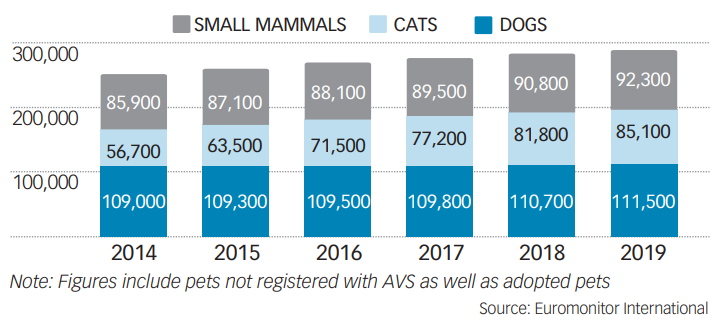
Although a small country, Singapore’s population of pet dogs, cats, and small mammals (hamsters, guinea pigs, and rabbits) has been growing over the years.

In Singapore, the dog and cat population have increased by CAGRs of 1.9% and 7.3% respectively from 2016 – 2020. Showing a higher growth in cat population. Both are expected to grow to 1.3 million (cat) and 465,000 (dog) by 2025. This is due to the fact that cats require less space and Singapore is quite a small country. 

Singapore Retail Market Size

In 2016, Singapore has a market size of US$78.0 million which grew into US$91.6 million in 2020. The projected market size by 2025 is US$111.9 million. Every category of pet foods has contributed to the growth in Singapore and seemingly will continue to do so. In 2020, research shows that more than half of the pet food market was made up of dog food at 62.1% following by cat food at 26.2%. 

Pet Food Company Shares in Singapore

In 2019, 55.8% of pet food purchases in Singapore were made from the top five companies: Mars Inc., Nestle SA, Colgate-Palmolive Co, WellPet LLC, and Fish4Dogs Ltd. 

Mars Inc., Nestle SA, and Colgate-Palmolive Co lost market share from 2015 – 2019 with a CAGRs of -4.3%, -3.0%, and -4.9% respectively, while WellPet LLC and Fish4Dogs Ltd. gained market share during the same years, with CAGRs of 3.6% and 12.2% respectively. 

This shows that the Singapore pet food market is dominated by international brands, you can see the breakdown of the most popular brands in Singapore below. 

The top 10 brands are all international brands, with Hill’s Science Diet (by Colgate-Palmolive) at the top with retail sales value of US$6.5 million, followed by Wellness (by WellPet LLC) at US$4.8 million. 

Singapore Pet Food Market Segmentation

Dog Food

From 2016 to 2020, dog food sales experienced a steady increase, from US$48.8 million to US$56.9 million, with a CAGR of 3.9%. Dry dog food accounted for 68.0% of total dog food sales in 2020. 

Premium-priced dry dog food was the strongest driver of overall dog food value sales. Premium-priced dry dog food, which represented 87.3% of total dry dog food sales in 2020, had strong growth from 2016 to 2020 and is expected to continue this trend from 2021 to 2025. In the coming years, innovative pet humanization trends such as insect- and plant-based protein are expected to lead the dog food market in Singapore. Manufacturers will seek to launch more functional and natural dog food to meet dog owners’ desires (Euromonitor, 2020).

Cat Food

Cat food grew significantly from 2016 to 2020, at a CAGR of 11.6%, and is forecast to grow at a CAGR of 4.0% between 2021 and 2025. Dry cat food accounted for 29.0% of the cat food sales in 2020 and recorded a CAGR of 5.4% from 2016 to 2020. Premium dry cat food had the highest growth in the dry cat food category, with a CAGR of 8.4%, from 2016 to 2020 and is forecast to take the lead (CAGR of 3.3%) from 2021 to 2025.

Wet cat food accounted for 52.1% of the cat food sales in 2020. Wet cat food sales were stimulated by higher demand for functional and natural products (Euromonitor, 2020). Cat treats and mixers recorded a CAGR of 20.5% from 2016 to 2020 and is expected to grow at a CAGR of 7.0% from 2021 to 2025.

Singapore Pet Product Distribution Channels

In 2020, grocery retailers (22.4%) and non-grocery specialists such as pet shops (51.7%) sold most of the pet products in Singapore. Pet shops remained the dominant sale distribution channel for dog and cat food. E-commerce won share from pet shops and supermarkets, with a CAGR of 26.0% from 2016 to 2020.

Zetaboto Widget
Zetaboto Widget